
Skincare Routine Order
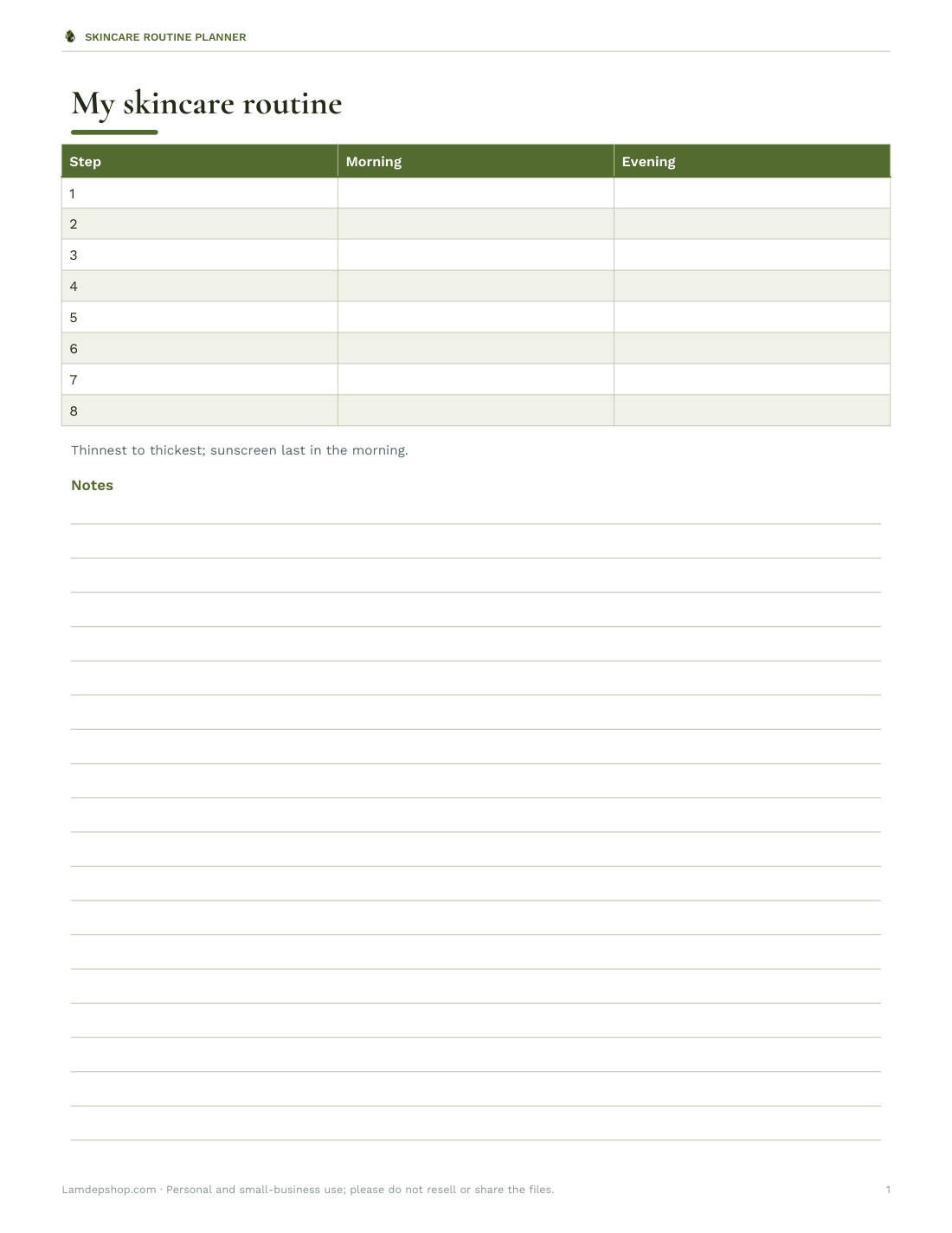
The order you apply skincare affects how well each product works. Tick the products you use and this planner puts them in a sensible order for morning and evening: cleanse first, thin water-based products before thick creams, treatments before moisturiser, and sunscreen as the final step in the morning. It also flags active ingredients that are better not layered on the same night.
- Free to use
- No sign-up
- Runs in your browser
Skincare routine builder
Skincare Routine Planner
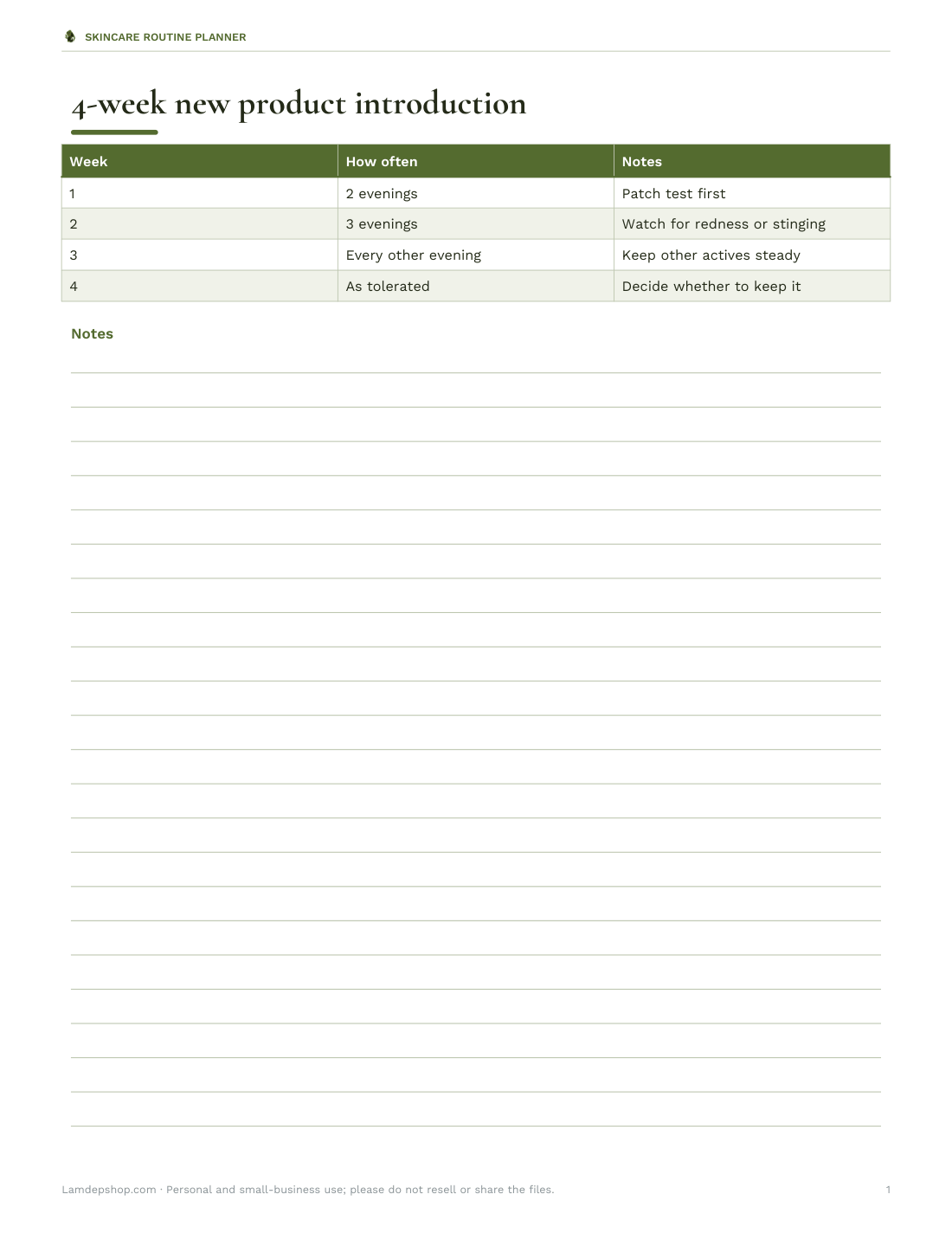
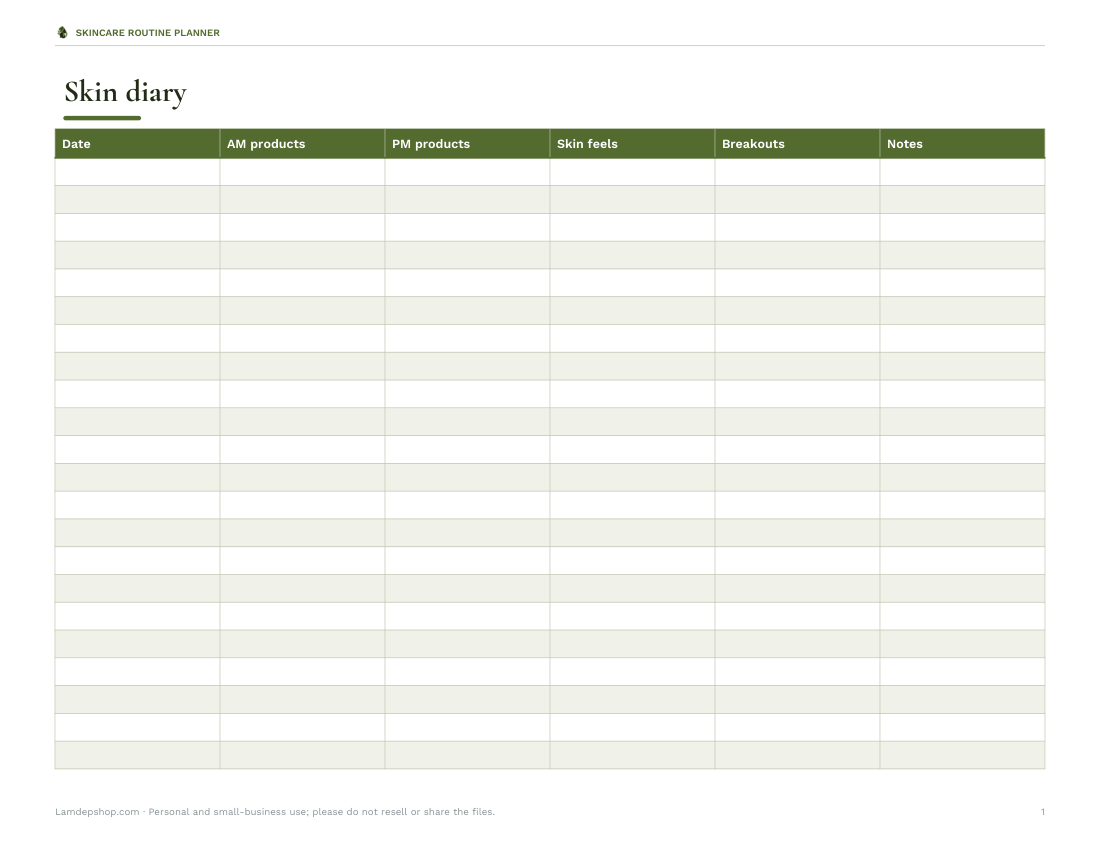
Printable morning and evening routine cards, a 4-week new-product introduction planner, a skin diary, a product inventory with expiry dates and a travel routine checklist.
- Routine cards (PDF/DOCX)
- Introduction planner (PDF)
- Skin diary (XLSX)
- Product inventory (XLSX, PDF)
- Travel checklist (PDF, DOCX)
Formats: PDF, DOCX, XLSX. Instant download after payment (link valid 72 hours, up to 5 downloads). AI-assisted: the templates were drafted with AI help and reviewed and laid out before publishing.
$5.00 USD, one-time 5 files · about $1.00 each
- Instant download
- 7-day refund
- Secure checkout by Stripe
7-day money-back guarantee. Full refund within 7 days of purchase, even after you download.
Free sample: Routine Cards (PDF, 58 KB)
Full refund within 7 days — see the refund policy and license.
Free printables
Single sheets you can print right now, no sign-up. The full pack adds every sheet in one download plus the editable files.
 Printable Skincare Routine Order Chart
 Printable Skincare Routine Introduction Planner
 Printable Skin Diary
 Printable Skincare Product Inventory
 Printable Travel Skincare Checklist
The basic rule: thinnest to thickest
Skincare is usually applied from the thinnest, most watery texture to the thickest and most occlusive, so each layer can reach the skin before a heavier one seals it in. That means cleanser, then toners and essences, then serums and treatments, then eye cream, moisturiser and oils — and in the morning, sunscreen on top. Dermatology organisations such as the American Academy of Dermatology describe a similar order.
Standard routine order
| Step | Morning | Evening |
|---|---|---|
| 1 | Cleanser (or just water) | Oil cleanser if wearing makeup or sunscreen, then cleanser |
| 2 | Toner or essence (optional) | Toner or essence (optional) |
| 3 | Antioxidant serum such as vitamin C | Treatment: retinoid or exfoliating acid |
| 4 | Hydrating serum (hyaluronic acid, niacinamide) | Hydrating serum |
| 5 | Eye cream | Eye cream |
| 6 | Moisturiser | Moisturiser |
| 7 | Sunscreen SPF 30+ | Face oil (optional) |
How to use the routine builder
- Tick every product you currently use or plan to use.
- The builder sorts them into morning and evening in a sensible order.
- If two actives are better kept apart, it splits your evening into A and B nights and explains why.
- Read the notes, then print the routine card for your bathroom mirror.
Your selection is saved in this browser only.
Worked example
Someone uses a cleanser, vitamin C, hyaluronic acid, a retinol, an AHA exfoliant, moisturiser and sunscreen. The builder gives a morning routine of cleanser → vitamin C → hyaluronic acid → moisturiser → sunscreen. At night it suggests alternating: Evening A is cleanser → hyaluronic acid → retinol → moisturiser, and Evening B is cleanser → AHA exfoliant → hyaluronic acid → moisturiser. It also reminds them that both retinol and AHAs increase sun sensitivity.
Active ingredients that need care
| Combination | Common advice |
|---|---|
| Retinoid + AHA/BHA | Alternate nights, especially when starting |
| Retinoid + benzoyl peroxide | Use at different times unless your prescriber advises otherwise |
| Vitamin C + AHA/BHA | Vitamin C in the morning, acids at night |
| Several exfoliants at once | Choose one; over-exfoliating damages the skin barrier |
| Niacinamide + vitamin C | Generally fine together for most people |
Introduce one new active at a time, a few times a week at first, and stop if your skin becomes red, stinging or flaky. Always patch-test new products.
Sunscreen: the last morning step
Apply sunscreen as the final layer of your morning routine, after moisturiser has absorbed, using about a quarter to half a teaspoon for the face and neck. Choose broad-spectrum SPF 30 or higher and reapply every two hours outdoors or after swimming or sweating. Makeup goes on top of sunscreen.
Adapting the routine to your skin
| Skin type | Common adjustments |
|---|---|
| Dry | Gentle cream cleanser, hydrating serum, richer moisturiser; face oil at night |
| Oily or acne-prone | Gel cleanser, lightweight moisturiser, BHA or benzoyl peroxide if tolerated |
| Sensitive | Fewer products, fragrance-free; introduce actives slowly |
| Combination | Lighter products overall, extra moisturiser only where dry |
| Mature | Retinoid at night, antioxidant serum and sunscreen in the morning |
These are general patterns; your skin may behave differently, and seasons change what it needs.
Morning vs evening: why they differ
Morning routines focus on protection: an antioxidant such as vitamin C, hydration and, above all, sunscreen, because daytime brings UV exposure and pollution. Evening routines focus on repair and treatment: removing sunscreen and makeup, then retinoids or exfoliating acids that are best used without sunlight, followed by moisturiser. Retinoids in particular are broken down by light, which is one reason they are usually applied at night.
How much product to use
- Cleanser: a small coin-sized amount, massaged for about 30 seconds.
- Serums: two or three drops, or a pea-sized amount.
- Retinoid: a pea-sized amount for the whole face.
- Eye cream: a rice-grain amount per eye, patted on.
- Moisturiser: enough to cover the face without leaving a thick layer.
- Sunscreen: about a quarter to half a teaspoon for face and neck.
Keeping it simple
A routine doesn’t need many steps to work. For many people a gentle cleanser, a moisturiser and a daily sunscreen cover the basics, with one treatment product added for a specific goal. Adding many actives at once makes it hard to tell what helps and increases the chance of irritation. If you have a skin condition such as eczema, rosacea or persistent acne, a dermatologist can recommend products and the order to use them.
How long to wait between steps
For most products, waiting until each layer feels mostly absorbed — about 30 seconds to a minute — is enough. Some people wait longer before applying a retinoid to reduce irritation, or apply moisturiser first (the “sandwich” method). Prescription products may come with specific instructions; follow those.
The printable routine templates
The template pack includes printable morning and evening routine cards, a 4-week new-product introduction planner, a skin diary to track how your skin responds, a product inventory with opening dates and expiry, and a travel routine checklist — PDF, Word and Excel.
Frequently asked questions
What order should skincare go in?
Cleanser, toner, serums and treatments, eye cream, moisturiser, then sunscreen in the morning.
Does vitamin C go before or after moisturiser?
Before — serums go on before moisturiser.
Can I use retinol and AHA together?
Many people alternate nights to reduce irritation.
When should I apply sunscreen?
Last in your morning routine, before makeup.
Where does face oil go?
Usually after moisturiser, at night.
Is this medical advice?
No — it is general guidance; follow your dermatologist for prescription products.
Can I use niacinamide with vitamin C?
For most people, yes — the old advice to keep them apart is no longer widely followed.
Should toner go before serum?
Yes, toners and essences go on after cleansing and before serums.